Blog
- Home
- /
- Blog
How to Choose the Right Textile Finishing Process?
Textile finishing can change how a fabric feels, performs, and lasts. A softener may improve drape, while a water-repellent treatment can alter breathability and care requirements. Choosing a process is therefore not a final cosmetic decision. It is a technical choice tied to the product’s intended use.
The scale of the industry makes those choices significant. Textile Exchange’s Materials Market Report 2024 estimates that global fiber production reached 124 million tonnes in 2023, with further growth projected. The report measures fiber production, not finishing impacts, but it highlights why mills and brands need to assess material use carefully. Finishing decisions can affect chemical inputs, energy, water, production time, and the fabric’s usable life. Small choices matter.
A reliable selection starts with the fiber blend, fabric construction, customer requirements, and available machinery. A finish that works on cotton may behave differently on polyester or a blended fabric. Define measurable targets, such as spray performance, shrinkage, colorfastness, or hand feel, then test them on production-representative samples. Review the chemical supplier’s technical data and applicable industry guidance, and confirm results after laundering or abrasion where relevant. A lab swatch can look excellent. Not always on the production line. That gap is easy to underestimate, and it deserves honest review. This guide explains how to compare textile finishing options, balance performance with resource demands, and choose a process that suits both the fabric and its final application.
What Is Textile Finishing and What Purposes Does It Serve?
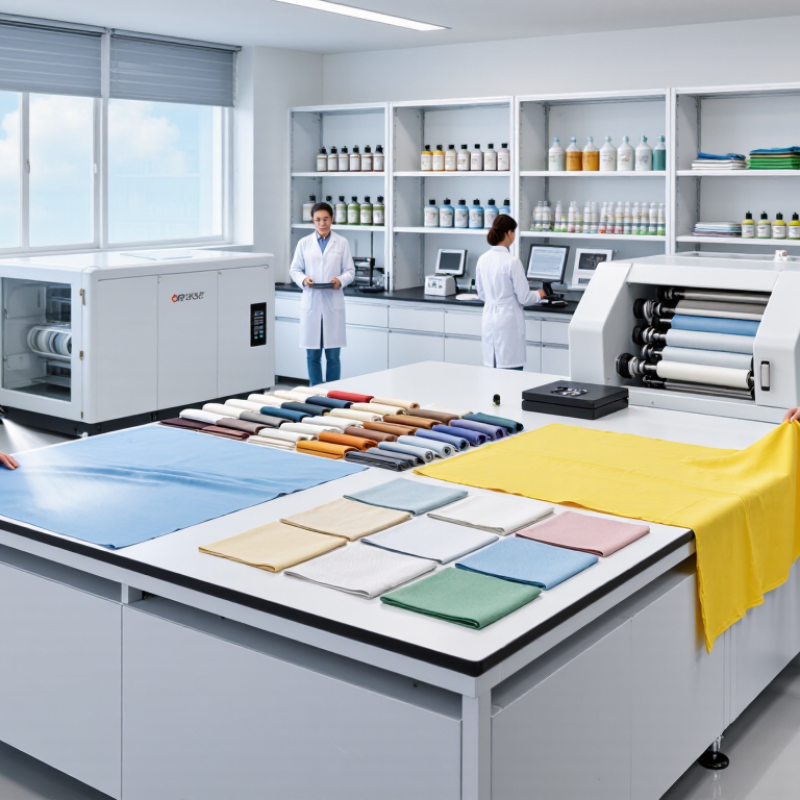
Textile finishing is the set of treatments applied to fabric to adjust how it looks, feels, or performs. It usually follows fabric formation and may take place after dyeing or printing. Some finishes rely on mechanical action, such as brushing a surface or compressing cloth between rollers. Others use chemical treatments that are carefully applied, dried, and sometimes heat-set. The exact sequence depends on the fiber, fabric construction, and intended use. It is not decoration alone. A cotton shirt may be softened for comfort, while curtain fabric may be treated to help resist creasing. These results depend on process control, not just the name of a finish.
Finishing can improve softness, smoothness, dimensional stability, wrinkle recovery, or resistance to water and stains. It can also change a fabric’s appearance, giving it a raised nap, a slight sheen, or a crisp hand. Small changes matter. A coating that helps repel droplets may also affect breathability or drape, so performance should be checked against the product’s real use. Manufacturers commonly assess properties such as shrinkage, colorfastness, and surface feel through testing. Results can vary with fiber blend, fabric weight, and washing conditions. The word “finish” sounds final, but effects may weaken with repeated laundering. That part deserves honest attention when specifications are written.
Which Fabric Properties Need to Be Improved?
Before choosing a textile finishing process, identify the fabric property that needs improvement. A cotton shirt may need to absorb perspiration faster, while a curtain may need better resistance to sunlight. These are different targets. Write down the intended use, the current weakness, and how the finished fabric will be evaluated.
Common goals include greater water repellency, improved absorbency, softer hand feel, reduced pilling, and better dimensional stability. For moisture management, check how quickly water spreads across the surface and whether it passes through the fabric. A water-repellent finish may help an outdoor fabric shed droplets, but it can also reduce breathability. Trade-offs matter. Softness is subjective, too; a smooth swatch may feel pleasant but lose its character after repeated washing.
Match the process to the fiber, construction, and care conditions. Mechanical treatments can alter surface texture, while chemical finishes may add functions such as wrinkle resistance or repellency. Test representative samples before treating a full production lot. Measure the target property before and after laundering, and compare results with an untreated control. In practice, one test rarely tells the whole story. A finish can perform well in a lab yet feel too stiff in a garment, so keep hand feel and end use in the evaluation.
How to Choose the Right Textile Finishing Process?
Match the finish to the fabric property you need to improve
This chart shows common property targets for selected finishing processes. A value of 1 indicates a typical target, not a measured performance rating. Results vary with fiber type, fabric construction, finish formulation, and processing conditions.
What Are the Main Types of Textile Finishing Processes?
Textile finishing processes are commonly grouped as mechanical, chemical, and thermal methods.
Mechanical finishing changes a fabric’s surface or structure without relying mainly on added chemicals.
Calendering presses cloth between heated rollers to create a smoother, sometimes glossier face. Brushing raises fine fibers, giving flannel its soft, fuzzy hand.
Small changes matter.
Chemical finishing applies substances to adjust performance or feel.
Softeners can make fabric drape more easily, while water-repellent treatments help droplets bead on the surface. Enzyme treatments can remove loose fibers and reduce pilling on some cotton fabrics.
Results depend on the fiber, recipe, and processing conditions. A finish may also affect breathability or durability, so the desired benefit should be checked against the fabric’s intended use.
Thermal finishing uses controlled heat to set dimensions or alter texture.
Heat setting is common for synthetic fibers, helping fabric retain its shape after processing. Coating and lamination add a layer or film for functions such as wind resistance, but can make cloth stiffer.
A common planning mistake is choosing by appearance alone. Test swatches under realistic washing and wear conditions; laboratory results may not capture every use.
There is no perfect finish, and that is worth remembering.
How Do Process Compatibility, Cost, and Sustainability Compare?
Choosing the right textile finishing process means matching the treatment to the fiber, fabric construction, and intended use. Fit comes first. Enzyme washing can soften cotton, while heat setting helps stabilize many synthetic fabrics. A finish suited to one fiber may weaken another or alter color and hand feel. Trial runs on small fabric batches can reveal shrinkage, uneven effects, or stiffness before production scales up.
Tips: Ask for the process temperature, water use, chemical inputs, and expected finish life. Compare samples after washing, not just straight from the finishing line. Not always. A lower-cost treatment may need more frequent reapplication.
Cost and sustainability are connected, but not in a simple way. A low-temperature process may reduce energy demand, while a durable finish can extend a garment’s useful life. Yet the result depends on the full recipe, equipment, wastewater handling, and care instructions. Request measurable data from the facility, such as water and energy use per kilogram of fabric. Some figures may be estimates, so check how they were calculated. Then weigh those impacts against performance needs, like water resistance, softness, or dimensional stability. A finish that misses its purpose can create waste too.
How Can You Test and Select the Right Finishing Process?
Choose a finishing process by testing fabric that matches the intended product, not a convenient substitute. Cut several swatches from the same lot and keep an untreated piece as a control. Define the needs first: water repellency, softness, wrinkle recovery, or another measurable result. Then record the fabric’s weight, appearance, and dimensions before treatment. Small differences matter.
Ask the finisher to apply candidate treatments under documented conditions, including temperature, chemical concentration, and curing time. Test treated swatches for shrinkage, color change, abrasion, and performance after repeated washing. Use the same test method and conditioning time for every sample; otherwise, results may be hard to compare. Check hand feel, too. Numbers miss that.
A sample that performs well once may change after laundering or storage. Run repeated tests, and, where possible, make a small production trial before approving a process. Compare results against the product’s actual use and care expectations, not just the best-looking swatch. Keep the test records and note any trade-offs. A softer finish may reduce durability, while a durable coating can make fabric feel stiff. That judgment is not always neat. Involve quality staff and fabric users, and repeat tests when results vary.
How to Choose the Right Textile Finishing Process? - How Can You Test and Select the Right Finishing Process?
| Performance Need | Finishing Process to Consider | Useful Test Method | What the Test Evaluates | How to Use the Result | Key Selection Considerations |
|---|---|---|---|---|---|
| Water repellency for outerwear or outdoor fabrics | Water-repellent finish, such as a durable water-repellent treatment | AATCC TM22, Water Repellency: Spray Test | Surface wetting after water is sprayed onto a fabric specimen | Compare the fabric’s rating before and after laundering or abrasion. A higher rating indicates less visible surface wetting under the test conditions. | Spray testing measures surface wetting, not resistance to water passing through the fabric. Pair it with hydrostatic-pressure testing when barrier performance matters. |
| Resistance to water penetration under pressure | Waterproof or water-barrier coating, membrane, or laminated construction | ISO 811, Determination of Resistance to Water Penetration—Hydrostatic Pressure Test | Water pressure at which water penetrates through a fabric specimen | Compare hydrostatic-pressure results with the product specification, both initially and after the required care or durability cycles. | Construction, seams, coating uniformity, and test conditioning can affect results. A fabric test alone does not establish finished-garment seam performance. |
| Oil and oily-soil repellency | Oil-repellent finish, where permitted and suitable for the intended use | AATCC TM118, Oil Repellency: Hydrocarbon Resistance Test | Resistance to wetting by a series of test liquids with different surface tensions | Use the reported grade to compare samples against the required product target; test again after laundering if durability is important. | Review applicable chemical restrictions and end-use requirements. Oil repellency does not by itself demonstrate stain release or easy cleaning. |
| Reduced wrinkling and improved crease recovery | Durable-press or crease-resistant resin finish | AATCC TM66, Wrinkle Recovery of Woven Fabrics: Recovery Angle Test | Recovery angle after a folded specimen is released under the specified test procedure | Compare warp and filling directions and assess the result against the fabric’s appearance and performance requirements. | Resin treatments can affect strength, hand, absorbency, and care performance. Evaluate these properties alongside wrinkle recovery. |
| Reduced shrinkage or dimensional change during care | Preshrinking, compacting, heat setting, or other process suited to the fiber and fabric construction | ISO 5077 for dimensional change, used with a specified washing and drying procedure such as ISO 6330 | Change in fabric dimensions after the prescribed washing and drying cycles | Record lengthwise and widthwise changes and compare them with the product specification after the specified number of cycles. | Results depend on the selected wash, drying, and measurement procedures. Use care conditions that match the intended product label and market requirements. |
| Improved resistance to surface abrasion | Surface modification, coating, or construction adjustment selected for the fiber and end use | ISO 12947-2, Martindale abrasion test—determination of specimen breakdown | Resistance to abrasion under the specified test conditions, commonly reported by cycles to a defined breakdown point | Compare treated and untreated samples using the same specimen preparation, pressure, and endpoint criteria. | Abrasion performance is not the same as pilling performance. Check appearance, flexibility, and coating integrity as well as breakdown results. |
| Reduced formation of pills and fuzz | Anti-pilling finish, singeing, or another surface-control process appropriate to the fabric | ISO 12945-2, Pilling resistance—modified Martindale method | Surface pilling and fuzzing after a specified rubbing procedure, assessed using the method’s rating system | Compare ratings at the same test stage and under the same assessment conditions; higher appearance ratings generally indicate less visible pilling. | Fiber type, yarn structure, fabric construction, and finishing all influence pilling. Confirm performance after care if the product will be laundered. |
| Improved absorbency or moisture spreading | Hydrophilic or wicking finish; alternatively, removal of hydrophobic residues from the fabric | AATCC TM79, Absorbency of Textiles; select an additional moisture-management method if spreading or transport is required | Wetting or absorbency behavior under the selected procedure | Use the result to compare how readily specimens wet, then test spreading and drying separately if those are product requirements. | Absorbency, wicking, and drying are distinct properties. One test does not fully characterize moisture management in wear. |
Selection approach: Define the end-use performance target first, then test the untreated fabric and candidate finishes under identical conditions. Verify durability after relevant laundering, abrasion, or exposure cycles, and assess hand, appearance, strength, comfort, care requirements, and applicable chemical restrictions before approving a process. Always confirm the current edition and scope of each test method.
Related Posts
-
Top 10 Textile Chemical Processing Techniques You Should Know?
-
What is Textile Finishing and Why is it Important for Buyers?
-
2026 Best Textile Chemicals for Global Buyers?
-
Top Textile Chemicals and Auxiliaries Suppliers Worldwide?
-

China Top Textile Chemical Processing Manufacturers?
-
How to Choose the Best Textile Processing Chemicals for Your Needs