Colourinn Industries – Textile & Dyes Auxiliaries Manufacturer & Exporter

Blog

  1. Home
  2. /
  3. Blog

What is a Comprehensive List of Textile Chemicals?

Textile chemicals play a crucial role in the fabric and garment industry. They enhance the performance and durability of textiles. According to the American Association of Textile Chemists and Colorists (AATCC), the global textile chemicals market was valued at approximately $25 billion in 2022. This figure is expected to grow as demands for innovative and eco-friendly materials rise.

A comprehensive textile chemicals list includes various categories. These range from dyes and pigments to surfactants and coatings. Each category serves unique purposes, impacting colorfastness and texture. However, with a vast array of chemicals available, it can be overwhelming for manufacturers. Many businesses face challenges in selecting the right chemicals for their needs. Quality assurance remains a critical issue, affecting product safety and environmental sustainability.

Industry reports highlight the importance of compliance with safety regulations. Many chemicals pose risks if improperly managed. The challenge lies in balancing efficiency and safety. The goal should be to maintain high standards while minimizing environmental impact. This situation calls for ongoing education and reflection in chemical usage in textile production.

What is a Comprehensive List of Textile Chemicals?

Overview of Textile Chemicals and Their Importance in Manufacturing

Textile chemicals play a crucial role in the manufacturing process. They enhance the properties of fibers, making them more durable and easier to care for. According to industry reports, over 80% of textile manufacturers rely on these chemicals for improved performance. Chemicals such as dyes, auxiliaries, and finishing agents contribute to the final quality of textile products.

However, there is a growing concern about the environmental impact of certain textile chemicals. Many synthetic dyes pose risks, leading to water pollution. Reports indicate that wastewater from textile production can contain high levels of harmful substances. It's essential for manufacturers to explore greener alternatives.

Tips: Consider using non-toxic dyes that minimize environmental harm. Implement water treatment systems to reduce pollutants. Regular audits of chemical usage can help identify areas for improvement. Adopting sustainable practices is not only ethical, but it can also meet consumer demand for eco-friendly products.
Classification of Textile Chemicals: Dyestuffs, Finishing Agents, and More

Textile chemicals play a vital role in the fabric production process. They are classified into several categories, such as dyestuffs and finishing agents. Dyestuffs are responsible for adding color to the fabric. They help create vibrant, appealing textiles. There are diverse types of dyes, including reactive, vat, and disperse dyes. Each type serves a unique purpose. Choosing the right dye requires careful consideration. Poor colorfastness can lead to disappointment for consumers.

Finishing agents are another crucial category of textile chemicals. These agents alter the fabric’s properties. They can enhance durability, water resistance, or softness. However, the effectiveness of some finishing agents can vary across different fabrics. Not every agent integrates well with every material. This mismatch may cause unexpected results, such as stiffness or discoloration. The world of textile chemicals is complex and often fraught with trial and error.

Moreover, other categories of textile chemicals exist. These include surfactants for cleaning and softening agents. These functions are essential but can impact the environment. Sustainable practices in using these chemicals are needed. The textile industry must reflect on its choices. Striking a balance between quality and sustainability is key. Rethinking traditional methods could lead to better outcomes in fabric processing.

What is a Comprehensive List of Textile Chemicals? - Classification of Textile Chemicals: Dyestuffs, Finishing Agents, and More

Category Chemical Name Function Common Use
Dyestuffs Reactive Dyes Coloration Cotton and Cellulosic Fibers
Dyestuffs Acid Dyes Coloration Wool, Silk, and Nylon
Finishing Agents Water Repellent Agents Water Resistance Outerwear, Fabrics
Finishing Agents Softening Agents Softness Enhancement Cotton and Blends
Auxiliary Agents Surfactants Wet Processing Dyeing and Washing
Auxiliary Agents Antistatic Agents Static Control Synthetic Fabrics

Commonly Used Textile Chemicals and Their Functions in Fabrics

What is a Comprehensive List of Textile Chemicals?

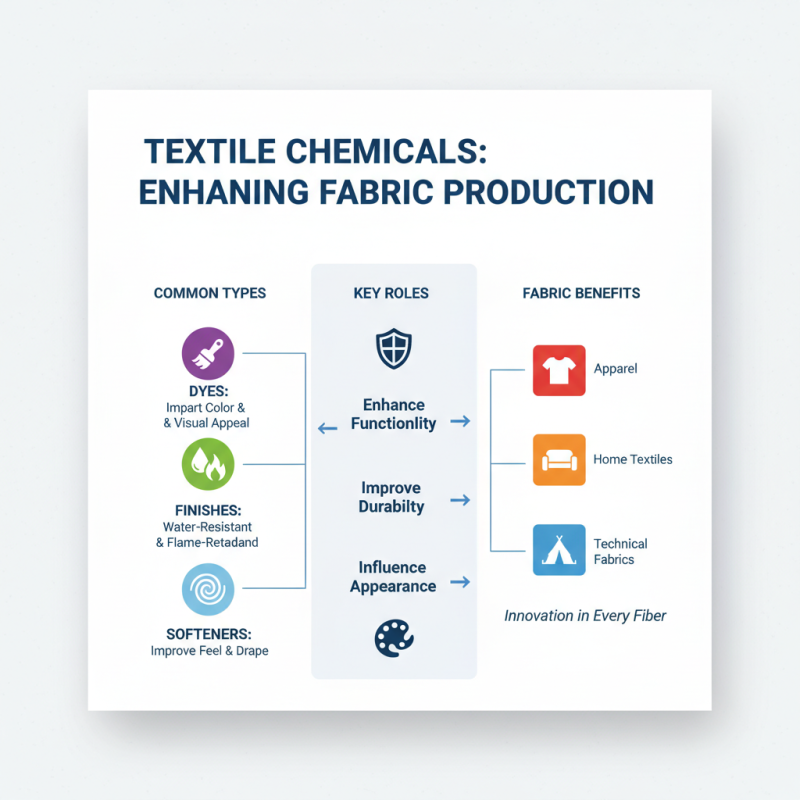
Textile chemicals play a vital role in the production and finishing of fabrics. These chemicals enhance functionality, improve durability, and influence the overall appearance of textiles. Commonly used textile chemicals include dyes, finishes, and softeners. Dyes impart color and enhance visual appeal. Meanwhile, finishes can provide water-resistant or flame-retardant properties.

Softening agents are essential in rendering fabrics comfortable against the skin. They reduce stiffness, making garments feel pleasant to wear. The importance of choosing the right chemical cannot be overstated. Poor choices may lead to issues like fading or discomfort, which can be frustrating for consumers.

**Tip:** Always test fabric samples with different chemicals before large-scale application. This practice helps identify the best fit for your project.

It’s crucial to acknowledge that not all textile chemicals are created equal. Some might have negative impacts on health or the environment. Therefore, staying informed about safer alternatives is important. Evaluate chemical compositions and choose sustainable options whenever possible.

**Tip:** Research trends in eco-friendly textile treatments. Awareness can lead to better decisions for both consumers and manufacturers.

Environmental Impact of Textile Chemicals and Sustainable Alternatives

Textile chemicals play a crucial role in the production of fabrics. However, their impact on the environment cannot be overlooked. Many of these chemicals are toxic and can contaminate water sources. They often end up in rivers and oceans, harming aquatic life. This contamination can spread through the food chain, affecting human health as well.

Sustainable alternatives are emerging to combat these issues. Natural dyes and organic treatments are gaining popularity. These options reduce the reliance on harmful synthetic chemicals. They lessen carbon footprints and promote better practices in the industry. Nevertheless, the transition is slow and challenging. Awareness is growing, but many manufacturers still depend on traditional chemicals due to costs and convenience.

There is an urgent need for change. Even with available sustainable options, many still choose cheaper, harmful alternatives. It raises questions about responsibility. Consumer demand can drive change, but it requires collective effort. Moving towards sustainability in textile production is essential for our planet's health. The future depends on innovative solutions.

Regulatory Standards for the Use of Textile Chemicals in the Industry

What is a Comprehensive List of Textile Chemicals?

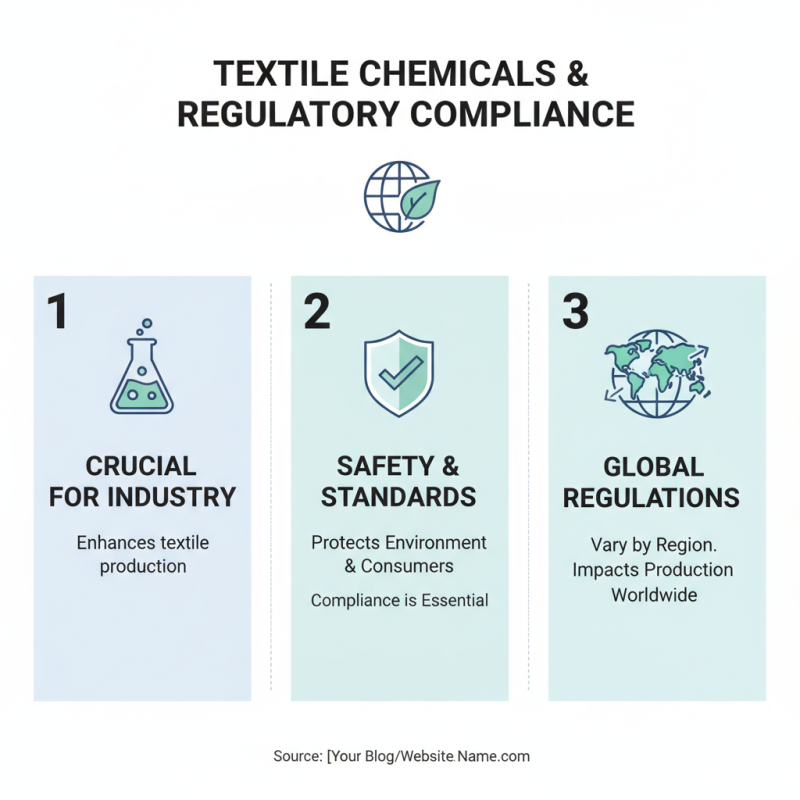
The use of textile chemicals is crucial in the industry. However, it is essential to comply with regulatory standards. These standards ensure that chemicals used are safe for both the environment and consumers. Regulations vary by region, affecting how textiles are produced worldwide.

For instance, some chemicals may require detailed labeling. Others might have restricted use altogether. There’s a need for manufacturers to understand these regulations. They must evaluate each chemical's impact before use. Certain harmful substances can linger in fabrics, posing health risks. It's a challenge for companies to keep pace with changing standards.

Companies sometimes overlook the full implications of their chemical use. They might prioritize cost over compliance. This can lead to legal issues down the line. Moreover, supply chains can be complicated. It’s vital that all links adhere to the same standards. Ignoring this can endanger public safety.