
Blog
- Home
- /
- Blog
Top Stretch Pique Polo Manufacturers for Global Buyers
Stretch Pique Polo is becoming a sharper sourcing category for global apparel buyers. Its appeal is practical: breathable texture, controlled stretch, and a polished surface that survives repeated wear. Buyers now inspect more than color cards. They examine fiber composition, fabric weight, recovery, pilling resistance, dye consistency, and factory documentation.
Textile Exchange reported that global fiber production reached about 124 million tonnes in 2023. It also projected production could exceed 160 million tonnes by 2030. Polyester represented roughly 57% of output, while cotton remained a major natural-fiber choice. These figures make material decisions impossible to ignore. For polo manufacturers, recycled polyester, certified cotton, and blended constructions can influence both performance and environmental claims. Yet certification alone does not guarantee responsible production.
La Rhea Pepper, a former Textile Exchange leader, stated, “We have to transform the way we produce and consume materials.” Her point matters when comparing Stretch Pique Polo suppliers across China, Turkey, Portugal, India, and other manufacturing hubs. The best factories should show test reports, traceable inputs, stable knitting capacity, and clear quality-control procedures. A smooth collar is not enough. Neither is a fashionable sustainability slogan.
This guide introduces leading Stretch Pique Polo manufacturers for global buyers. It considers technical capability, customization, production experience, compliance, and communication reliability. Some rankings remain imperfect because supplier data changes quickly. That limitation deserves attention. A factory may perform well on samples, then struggle during peak-season production. Careful buyers should verify current evidence before placing large orders.
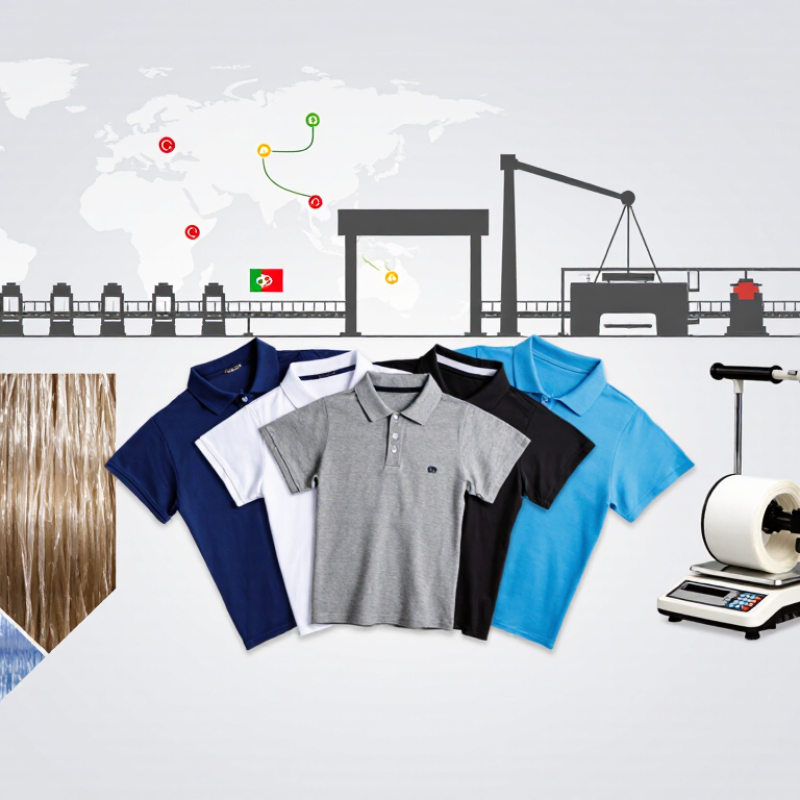
Definition and Key Features of Stretch Pique Polo Shirts
Stretch pique polo shirts combine a textured pique knit with elastic fibers, usually elastane. The fabric feels structured, breathable, and flexible. Its raised surface helps air circulate around the body. The stretch component improves movement across the shoulders and chest.
For global buyers, fiber selection affects comfort, durability, and sourcing claims. Textile Exchange’s 2024 Materials Market Report states that global fiber production reached 124 million tonnes in 2023. It may reach 160 million tonnes by 2030. This growth increases the need for measurable material data.
Buyers should request fiber percentages, fabric weight, recovery tests, and colorfastness results. A polo can look premium yet lose shape after repeated washing. That is an uncomfortable but important reality.
Tips: Check four-way stretch, not only widthwise stretch. Ask for recovery after 20 washing cycles. Inspect the collar, placket, and sleeve seams closely. Pique texture can hide uneven knitting. Also, do not treat recycled content as automatic proof of quality. Verify certificates and test reports through an independent laboratory. A small sample often reveals more than a polished catalog.
How to Evaluate Stretch Pique Polo Manufacturers
Selecting stretch pique polo manufacturers requires more than comparing prices. Begin with fabric performance. Request the fiber composition, fabric weight, stretch percentage, and recovery test results. A practical sample should feel smooth, resist pilling, and return to shape after repeated movement.
Wash it yourself.
Measure shrinkage after three washes. Check whether the collar curls, the placket twists, or the color fades near the seams. A dependable manufacturer should provide clear testing records for colorfastness, dimensional stability, and fabric strength. Ask whether tests are completed in-house or by an independent laboratory. Both options can work, but undocumented claims deserve caution.
Production experience also matters. Review sample accuracy, stitching density, seam strength, and size consistency across several pieces.
Ask for the factory’s quality-control process, daily capacity, minimum order quantity, and realistic lead time.
A professional team should explain how it handles fabric defects and rejected garments. Certifications may support credibility, yet they should be verified and matched to the actual production site. A certificate alone proves little.
Do not judge a supplier from one perfect sample. I have seen collars perform well initially and lose recovery after washing. Small trial orders reveal more than polished presentations.
Communication should remain precise when measurements change or deadlines become tight. Reliable manufacturers share problems early, document corrective actions, and accept reasonable inspection standards. Mistakes still happen. The real test is how transparently they respond.
Leading Manufacturing Regions and Production Capabilities
Top Stretch Pique Polo Manufacturers for Global Buyers
Stretch pique polo production is concentrated in China, Turkey, Portugal, Bangladesh, and Vietnam. Each region serves different buyer priorities. China offers broad fabric access, automated cutting, and flexible order quantities. Turkey combines nearby European logistics with strong knitting and dyeing expertise. Portugal is known for careful sewing, refined finishing, and smaller premium collections. Bangladesh and Vietnam provide competitive labor capacity for larger programs, especially when specifications remain stable.
Production capability matters more than country labels. A dependable factory should control cotton-polyester blends, elastane recovery, color consistency, and fabric shrinkage. Look for computerized knitting machines, low-tension finishing, and fabric testing before cutting. A useful inspection checks collar shape, button alignment, seam strength, and surface pilling. Some factories can handle 20,000 pieces monthly, while smaller units may produce 3,000 to 8,000 pieces with closer supervision. Capacity claims still require verification.
Global buyers should request recent test reports, sample records, and a clear production calendar. Ask how rejected panels are separated before sewing. This small detail exposes factory discipline. Regional advantages can also create weaknesses. A low-cost supplier may have slower communication or inconsistent laboratory control. A premium workshop may struggle with sudden volume increases. No region is perfect. Stretch fabrics can surprise even experienced teams when finishing temperatures change. Careful pre-production testing remains essential, especially for dark colors, slim fits, and repeated washing.
Top Stretch Pique Polo Manufacturing Regions
The chart compares rounded 2023 apparel export values across major manufacturing markets. China provides the broadest vertically integrated supply base, while Bangladesh specializes in high-volume knitwear, Vietnam in export-oriented garment production, India in cotton and yarn integration, and Türkiye in flexible nearshore manufacturing.
Source reference: WTO and UN Comtrade apparel trade statistics; values are rounded estimates for overall apparel exports and are not company or brand sales figures.
Quality Standards, Customization, and Compliance Requirements
Stretch pique polo manufacturers serving global buyers must prove more than attractive samples. The Textile Exchange Materials Market Report 2024 recorded global fiber production at 124 million tonnes in 2023, with polyester representing about 57%. This scale increases scrutiny of recycled content, chemical control, and production traceability.
Quality begins with measurable fabric standards.
Buyers should request GSM records, elastane percentages, dimensional stability results, pilling grades, colorfastness tests, and collar recovery data. A polo may look smooth on a showroom table, yet twist after repeated washing. Fit still matters. Manufacturers should provide pre-production samples, lab-dip approvals, and wash-test photographs under controlled conditions. ISO 9001-based procedures can strengthen inspection consistency, although certification alone does not guarantee daily discipline.
Customization should cover yarn selection, pique texture, placket length, button material, embroidery placement, and size grading.
Every change needs a revised specification sheet. Document every change. Compliance requirements vary by destination, so factories should screen restricted substances against applicable chemical regulations, including limits for azo dyes, formaldehyde, phthalates, and heavy metals.
They should also verify fiber claims through transaction records and testing when recycled materials are specified. The International Labour Organization emphasizes responsible working conditions, but social audits can miss temporary labor or subcontracting. That gap deserves attention.
Buyers should inspect production sites, review corrective actions, and retain test reports linked to each shipment. A supplier can pass one laboratory test and still fail in actual wear; long-term review remains essential.
How Global Buyers Can Select the Right Supplier
Choosing the right stretch pique polo manufacturer requires more than comparing prices. Global buyers should examine fabric composition, stretch recovery, color consistency, and sewing quality. A reliable supplier can provide fabric specifications, sample measurements, and recent production photos. Ask how the material performs after repeated washing. Pique fabric may look excellent before testing, yet lose shape later. That detail matters.
Tips: Request a physical sample before placing a bulk order. Measure the collar, sleeve opening, body length, and shrinkage after washing. Check the supplier’s quality records and production capacity. Clear communication is essential. Confirm minimum order quantities, lead times, packaging details, and inspection procedures in writing. Also ask whether the factory can support lab testing and required product documentation for your target market.
Cost should not be the only deciding factor. A lower quotation may hide weaker fabric, unstable dyeing, or limited quality control. In my experience, small inconsistencies become expensive when thousands of pieces arrive. Still, supplier evaluations are not perfect. A polished sample does not guarantee stable bulk production. Buyers should consider an independent inspection or a controlled trial order. Review how quickly the manufacturer responds to technical questions. Notice whether answers are specific or vague. Trust grows through evidence, not promises. A capable manufacturer should explain its process clearly and accept reasonable improvements. The best supplier is not always the largest. It is the one that consistently delivers the required fit, fabric performance, documentation, and communication.
Top Stretch Pique Polo Manufacturers for Global Buyers - How Global Buyers Can Select the Right Supplier
| Selection Criterion | Practical Benchmark for Stretch Pique Polos | What Global Buyers Should Check | Priority | Recommended Evidence |
|---|---|---|---|---|
| Fiber Composition | Common commercial constructions include cotton with approximately 3%–5% elastane, or polyester blends with elastane. | Match the fiber blend to the end use. Cotton-rich pique generally emphasizes comfort and breathability, while polyester-rich blends typically improve moisture management, durability, and dimensional stability. | High | Fiber-content test report and signed product specification |
| Fabric Weight | Approximately 180–240 g/m² is a common range for lightweight to midweight polo shirts. | Confirm the target GSM after washing, because finishing and laundering can affect the final weight. Select lighter weights for warm climates and heavier weights for structured uniforms or cooler markets. | High | Pre-production fabric swatch and GSM test result |
| Stretch and Recovery | The fabric should provide comfortable crosswise stretch and recover its shape after repeated extension and washing. | Ask for test conditions, stretch percentage, recovery percentage, and the number of wash cycles used. Evaluate the collar, placket, side seams, and body separately. | High | Stretch-recovery report and wash-test samples |
| Dimensional Stability | A commonly requested tolerance for finished knit garments is about ±3% length or width change after care testing, subject to the agreed specification. | Define the washing method, water temperature, drying method, and measurement points before bulk production. Check shrinkage in both the fabric and finished garment. | High | Dimensional-stability test report and approved size chart |
| Colorfastness | For mainstream export apparel, buyers commonly request at least Grade 4 for color change and crocking, with stricter requirements for dark or high-visibility colors. | Test washing, perspiration, water, light, and dry or wet rubbing. Confirm that the testing standard and rating scale are stated clearly on the report. | High | Independent colorfastness laboratory report |
| Pilling Resistance | A minimum of Grade 3–4 after an agreed number of rubs or washes is a practical commercial target for many polo programs. | Use the buyer's required method, such as Martindale or another recognized textile test method. Inspect high-friction areas including the underarm, side body, and seat. | Medium–High | Pilling report and post-wash inspection sample |
| Construction and Workmanship | Consistent stitch density, secure seam ends, even topstitching, balanced plackets, and a stable rib collar are expected for export-quality polos. | Review seam strength, skipped stitches, puckering, button attachment, bartacks, label placement, and tolerance control. Ask for an approved workmanship standard with photographs. | High | Pre-production sample, workmanship checklist, and inspection report |
| Sizing and Grading | Size grading should follow the buyer's measurement chart, with tolerances defined separately for chest, body length, shoulder, sleeve, and collar measurements. | Require a size-set sample before bulk cutting. Confirm whether measurements are taken relaxed or stretched, particularly for the chest, rib collar, and sleeve opening. | High | Size-set sample and approved measurement specification |
| Compliance and Restricted Substances | The supplier should demonstrate control of applicable chemical, product-safety, labor, and environmental requirements for the destination market. | Check compliance with destination-country rules, including fiber labeling, care labeling, restricted-substance requirements, and any buyer-specific code of conduct. Do not rely on certificates alone; verify scope and validity. | High | Current audit documents, test reports, and traceable transaction records |
| Minimum Order Quantity | MOQ varies by fabric color, yarn, trim, and production line. Custom colors and custom fabrics generally require higher quantities than stock materials. | Request separate MOQs for each color, size range, fabric construction, and decoration method. Confirm whether small trial orders carry development or setup charges. | Medium–High | Written quotation with MOQ and setup-fee schedule |
| Production Lead Time | A typical export program may require roughly 45–90 days from confirmed materials and approved samples, depending on fabric availability and order complexity. | Separate fabric booking, lab-dip, sample, cutting, sewing, finishing, inspection, and dispatch timelines. Obtain a critical-path schedule rather than a single delivery date. | High | Milestone schedule and written delivery commitment |
| Quality-Control System | A robust process includes incoming-material inspection, inline checks, final inspection, measurement control, and defect classification. | Confirm the inspection level, acceptable quality limit agreed in the purchase contract, inspection timing, corrective-action process, and retention of production records. | High | Quality manual, inspection forms, and independent final-inspection option |
| Packaging and Export Readiness | Packaging should protect stretch garments from moisture, abrasion, compression, color transfer, and incorrect assortment during international transport. | Specify folding method, carton dimensions, polybag requirements, carton markings, barcodes, assortment ratio, and packaging materials. Confirm export documentation capability. | Medium | Packing specification, carton test details, and sample shipping documents |
| Total Landed Cost | The relevant comparison is product cost plus development, testing, packaging, freight, duties, inspection, payment, and potential quality-loss costs. | Compare suppliers using the same fabric weight, composition, testing scope, Incoterm, packaging standard, and payment terms. The lowest unit price is not always the lowest landed cost. | High | Comparable quotation and landed-cost worksheet |
Note: The benchmarks are general purchasing references for stretch pique polo programs. Final requirements should be confirmed through the buyer's technical pack, destination-market regulations, and independent testing.