Colourinn Industries – Textile & Dyes Auxiliaries Manufacturer & Exporter

Blog

  1. Home
  2. /
  3. Blog

How to Find Reliable Textile Mills for Global Sourcing?

Finding reliable textile mills is less about collecting the longest supplier list. It is about verifying what happens behind the factory gate. A polished website proves little. A trustworthy mill should provide clear production records, recent audit results, material certifications, and realistic lead times. Ask for the facility address, machinery list, monthly capacity, and subcontracting policy. Then compare those answers with physical evidence.

Ayesha Barenblat, founder of Remake and a recognized ethical fashion expert, says, “You cannot solve what you cannot see.” Her point applies directly to textile mills. Buyers should request production photographs, sample test reports, and documented fiber origins. If possible, visit the mill during fabric production, not during a carefully prepared presentation. Watch how operators handle yarn, dyeing chemicals, wastewater, and rejected rolls. Small details matter. Unlabeled storage can signal weak control.

Reliability also appears in communication. Strong mills explain delays before they become emergencies. They discuss minimum order quantities, shade variation, testing standards, and corrective actions without avoiding difficult questions. Still, no supplier is perfect. An audit may miss problems. A certificate may expire. My own sourcing reviews have shown that promising samples can hide inconsistent bulk production.

Use staged orders, independent laboratory testing, and written quality benchmarks. Check references from buyers with similar volumes and product requirements. A dependable partnership grows through evidence, repeated inspections, and honest reflection. The cheapest textile mills may not be the lowest-cost choice after defects, delays, and reputational damage appear. Look beyond price. Reliability is built, tested, and continuously reviewed.
How to Find Reliable Textile Mills for Global Sourcing?

Define Your Textile Sourcing Requirements and Quality Standards

Reliable textile sourcing begins with a precise product brief, not a supplier directory. Define fiber content, yarn count, fabric weight, construction, color tolerance, shrinkage, pilling, and seam strength. State the end use clearly. Sportswear, bedding, and uniforms need different performance limits.

The 2024 Textile Exchange Materials Market Report recorded 124 million tonnes of global fiber production in 2023. It projects approximately 160 million tonnes by 2030. This growth increases supplier choices, but it also increases quality risk. Ask each mill for pre-production samples, recent test reports, production capacity, and lot traceability records. Use an ISO/IEC 17025-accredited laboratory for independent testing. Specify test methods, sample conditioning, and acceptable results before receiving quotations. Include agreed limits for colorfastness, dimensional change, fabric strength, and chemical compliance. A certificate alone is not enough.

Tips: Convert every expectation into a measurable number. For example, set shrinkage below 3%, define a color tolerance, and agree on an inspection level. Request three sample lots, not one. Compare them under the same light source. A spreadsheet helps, but it cannot reveal every production weakness. I still find supplier claims persuasive when the technical evidence is thin. That is a warning sign. Recheck unclear data, document failed samples, and leave room for corrective action before bulk production.

Research and Shortlist Textile Mills by Capability and Location

Finding reliable textile mills begins with a capability map, not a long supplier list. Define fiber content, fabric weight, width, dyeing method, and monthly volume. Ask for machine details, production photos, and recent sample cards. A mill producing denim may not handle delicate knitted fabric well. Capability must match the product. I learned this after approving a technically impressive mill that lacked stable low-volume scheduling. That mistake delayed sampling by three weeks.

Location changes the sourcing calculation. Shortlist mills near reliable ports, spinning clusters, or major garment factories. Check inland transport time, customs procedures, weather exposure, and access to skilled technicians. A lower quoted price can disappear through storage and urgent freight. Request the mill’s average dispatch time over six months. Verify it against shipment records where possible. Local visits reveal practical details: humidity control, roll storage, laboratory space, and whether operators record shade changes. Photos are useful, but incomplete.

Score each candidate using evidence rather than promises. Compare test reports, batch consistency, wastewater controls, worker training, and documented quality procedures. Use the same checklist for every mill. Send a small trial order before negotiating larger volumes. Inspect color, shrinkage, pilling, seam performance, and packing labels. Keep written records of defects and corrective actions. A supplier may pass one audit and fail a production run. That is uncomfortable, but realistic. Reassess the shortlist after every trial, especially when communication becomes vague or technical answers arrive late.

How to Find Reliable Textile Mills for Global Sourcing? — Research and Shortlist Textile Mills by Capability and Location
Location Common Textile Capabilities Best-Fit Product Categories Relevant Certifications and Standards to Verify Supply-Chain and Logistics Profile Key Due-Diligence Checks Initial Sourcing Fit
China Spinning Weaving Knitting Dyeing Finishing Technical textiles Polyester and nylon fabrics, cotton blends, denim, knitted fabrics, home textiles, functional and industrial fabrics. OEKO-TEX® STANDARD 100, GOTS for organic textiles, Global Recycled Standard, ISO 9001, ISO 14001, and customer-specific restricted-substance requirements. Broad supplier ecosystem, strong domestic raw-material access, and extensive ocean, air, and inland transport options. Confirm export classification and origin documentation for the destination market. Check production-site ownership, subcontracting controls, dye-house wastewater management, laboratory test reports, approved-bulk-production samples, and traceability of recycled or organic inputs. High capability breadth
India Cotton spinning Woven fabrics Knits Processing Home textiles Cotton yarn, cotton woven fabrics, jersey, shirting, towels, bed linen, denim, and organic or recycled cotton programs. GOTS, Global Organic Textile Standard transaction certificates, OEKO-TEX® STANDARD 100, Better Cotton chain-of-custody documentation where applicable, and ISO management systems. Strong cotton-processing base and established export experience. Lead times can vary by region, season, port congestion, and availability of imported man-made fibers. Verify fiber origin, contamination controls, shrinkage and colorfastness testing, social-compliance audit scope, factory capacity during peak seasons, and transaction certificates for certified materials. Strong cotton specialization
Türkiye Integrated mills Knitting Denim Dyeing Garment support Fashion jersey, denim, towels, home textiles, printed fabrics, and short-lead-time European replenishment programs. OEKO-TEX® STANDARD 100, GOTS, Global Recycled Standard, ISO 9001, ISO 14001, and buyer-specific chemical-management requirements. Geographically close to Europe with established road, sea, and air connections. Suitable for responsive programs, but currency movements and energy costs should be considered in price reviews. Review knitting and dyeing capacity, color approval procedures, energy and water controls, fabric inspection records, and ability to meet EU chemical and product-safety requirements. High responsiveness for Europe
Pakistan Cotton yarn Weaving Dyeing Finishing Home textiles Bed linen, towels, canvas, denim, cotton sheeting, yarn, and other cotton-rich products. OEKO-TEX® STANDARD 100, GOTS where applicable, ISO 9001, ISO 14001, and social-compliance or customer-code audits. Well-established cotton and home-textile export base. Confirm port routing, container availability, energy continuity, and contingency planning for production interruptions. Check cotton quality parameters, yarn count consistency, weaving efficiency, finishing width and weight, colorfastness, wastewater treatment, and verified production capacity. Strong cotton and home-textile fit
Vietnam Knitting Woven fabrics Synthetic blends Dyeing Performance finishes Sportswear fabrics, polyester blends, recycled synthetic fabrics, lightweight woven fabrics, and export-oriented apparel materials. OEKO-TEX® STANDARD 100, Global Recycled Standard, bluesign®-related chemical requirements where required by the buyer, ISO 9001, and social-compliance audits. Strong export-manufacturing network and access to major seaports. Some mills rely on imported fibers or yarns, so material availability and minimum order quantities require confirmation. Verify fabric composition, recycled-content claims, pilling and colorfastness results, restricted-substance testing, dye-house capacity, and approval of nominated upstream suppliers. Strong performance-fabric potential
Bangladesh Circular knitting Jersey Dyeing Finishing Apparel-linked sourcing Cotton jersey, fleece, rib, interlock, basic knit fabrics, and materials for high-volume apparel programs. GOTS, Global Recycled Standard, OEKO-TEX® STANDARD 100, ISO 14001, and recognized building, fire, and worker-safety assessment requirements. Highly concentrated apparel supply chain with established export infrastructure. Imported raw materials and port or utility constraints may influence lead times. Confirm mill ownership and production location, knitting-machine gauge range, dyeing capacity, water-treatment performance, worker-safety records, and subcontractor disclosure. High-volume knitwear fit
Italy and Portugal Specialty weaving Knitting Wool processing Finishing Low-volume development Premium wool, linen, viscose, technical fashion fabrics, compact knits, printed fabrics, and development-oriented collections. OEKO-TEX® STANDARD 100, GOTS, Global Recycled Standard, Responsible Wool Standard where relevant, ISO 9001, and EU chemical-compliance documentation. Shorter transit times within Europe and strong product-development support. Unit prices and minimum order quantities are often higher than in large-volume sourcing regions. Evaluate raw-material traceability, finishing consistency, lab-dip approval process, minimum order quantities, production booking windows, and European product-compliance documentation. Premium and development focused
United States Technical textiles Nonwovens Industrial fabrics Performance finishing Protective fabrics, filtration media, medical textiles, automotive textiles, nonwovens, and domestically supported specialty programs. ISO 9001, ISO 13485 for applicable medical-device production, ASTM or AATCC test methods, OEKO-TEX® certification where applicable, and sector-specific regulatory requirements. Strong technical expertise and domestic distribution options. Labor, compliance, and energy costs may produce higher prices, while specialized capacity can be limited. Confirm technical specifications, test-method equivalence, regulatory status, lot traceability, quality-control plans, intellectual-property protection, and business-continuity arrangements. Strong technical-textile fit
Shortlisting rule: Treat certifications as verification points rather than automatic proof of reliability. Before approving a mill, compare its audited production capacity, representative test results, traceability records, environmental controls, quality history, sample performance, minimum order quantity, lead time, and contingency plan against the specific product and destination-market requirements.

Verify Mill Credentials, Compliance, and Production Capacity

A reliable textile mill should provide more than a polished website and fast replies. Request its legal registration, factory address, ownership details, and operating history. Check whether these records match the production site you plan to visit. Ask for recent compliance audits, environmental permits, worker safety records, and quality certificates. Confirm each document’s issuer, validity period, and covered facility. A certificate for one location may not cover another.

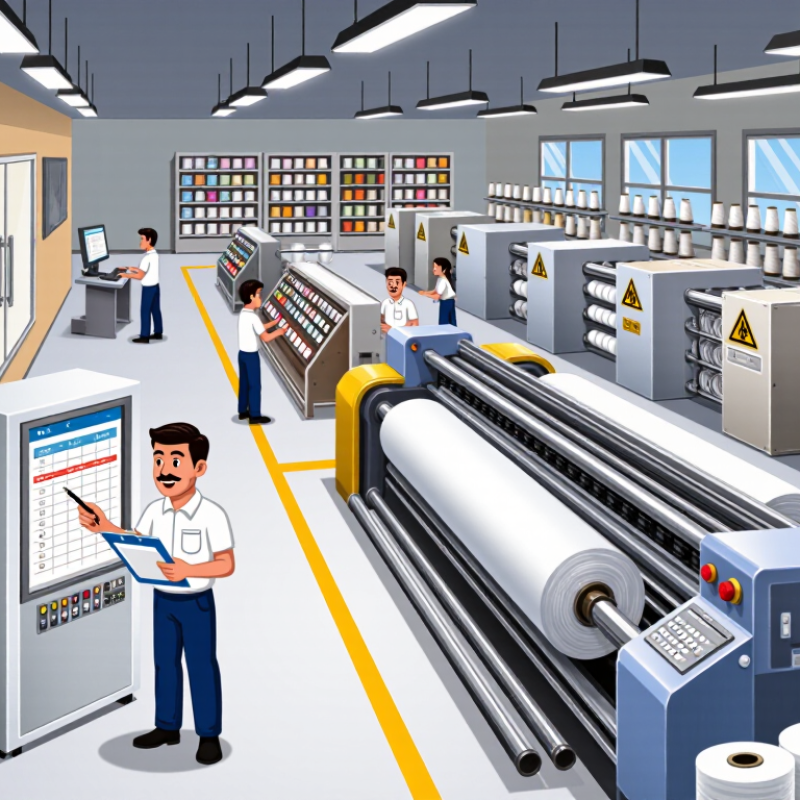
Production capacity needs evidence, not confident promises. Request a machine list, monthly output by fabric type, current order load, and average lead times. During a factory visit, observe cutting tables, dyeing equipment, inspection stations, and finished-goods storage. Count active production lines. Ask how the mill handles equipment failure, urgent color corrections, and peak-season demand. A small pilot order can reveal more than a long presentation.

I once trusted a capacity figure without checking the mill’s existing commitments. The quoted delivery looked reasonable, but the schedule later became difficult. That mistake changed my review process. Now I compare stated capacity with recent shipment records and production planning sheets. I also speak with the quality manager, not only the sales contact. Ask for test reports on shrinkage, colorfastness, and fabric weight. Keep records of every answer. Some documents may be incomplete. That is not an automatic rejection, but it requires clarification, dated evidence, and a realistic corrective plan.

Evaluate Samples, Pricing, Lead Times, and Communication

Finding a reliable textile mill starts with a physical sample, not a polished sales presentation. Request the exact fabric construction, fiber content, weight, width, and finishing details. Measure shrinkage after washing and inspect color consistency under daylight. Ask for test records covering colorfastness, strength, and pilling. A sample that feels excellent can still fail after production. I learned this after approving a soft jersey that twisted noticeably after laundering. Ask for evidence.

Pricing should be compared line by line. Request costs for yarn, dyeing, finishing, packing, inspection, and transport preparation. Confirm minimum order quantities and payment stages in writing. An unusually low quote may exclude testing or use a different fabric weight. Calculate the landed cost, not only the factory price. Leave room for reasonable changes, because rushed negotiations often create hidden expenses.

Lead times need measurable milestones. Ask when the mill can reserve materials, submit lab dips, approve bulk fabric, and complete final inspection. Put each date in a shared production schedule. Confirm what happens if yarn arrives late or a color needs correction. Communication is equally important. Test response quality with specific questions about defects, capacity, and corrective action. Reliable teams answer clearly and share dated photos, inspection notes, and revised schedules. Silence is information. I still review my supplier scorecards monthly, because one successful order can create false confidence.

How to Find Reliable Textile Mills for Global Sourcing?

Evaluate each mill using measurable benchmarks for sample quality, pricing, lead-time reliability, and communication speed. The chart uses normalized screening targets, where higher scores indicate stronger sourcing performance.

A reliable textile mill should achieve at least a 90% sample approval rate, keep commercial terms within an acceptable pricing range, deliver at least 95% of orders on time, and respond to inquiries within 24 hours in at least 90% of cases. Confirm these indicators through samples, quotations, production records, and written communication before placing a bulk order.

Build a Reliable Partnership Through Orders and Performance Reviews

How to Find Reliable Textile Mills for Global Sourcing?
A reliable textile mill proves its value through consistent orders, not promises. Begin with a small trial order using clear fabric specifications, color standards, packaging instructions, and delivery dates. Inspect the samples before production. Then compare the delivered fabric with the approved sample, checking weight, width, shade, shrinkage, and stitching quality. Small details matter.
Track each order with a practical performance review. Record defect rates, delivery accuracy, response speed, documentation quality, and corrective actions. A low price can look impressive, but repeated rework may cost more. Ask the mill to explain delays with evidence, not vague assurances. Strong partners accept reasonable feedback and improve their process. They should also identify risks before production starts. No first order is perfect. Your evaluation method may need adjustment too.
Tips: Use a simple scorecard after every shipment. Keep photos of defects, inspection notes, and approval samples. Review trends quarterly, rather than judging one mistake alone. Reward stable performance with clearer forecasts or larger trial volumes. Avoid increasing order quantities too quickly. A mill that performs well under pressure deserves closer consideration, but reliability still requires regular checks. Clear communication protects both sides.